
Tipping Points
When is a tip not really a tip? What French astronauts eat in outer space. Amazing vintage menus. A fabulous trip. And gorgeous glasses.

Last night I drove up a hill, through vineyards and orchards, to walk into a breathtakingly beautiful restaurant with an extraordinary view.
The welcome was warm. The food on the tables around me looked delicious. But then I opened the menu and read this: A 14% operations fee is applied to all checks and allows us to provide higher hourly wages, medical benefits, and paid time off for our team. Tips are appreciated but not expected.
And it kind of ruined my appetite.
I understand that food prices are now ruinous and people certainly deserve fair wages and good benefits. But in most businesses those costs of doing business fall to the employers, not the customers. If you need to raise your prices, then raise them. But don’t bury the cost in an extra charge that makes your prices seem lower than they actually are.
We are all accustomed to mentally adding 15 or 20 percent to the price listed on the menu. But if you are charging 14% on top of that I now have to add another 14 percent to understand that the $50 steak is actually going to set me back 67 dollars. At least if I don’t want to feel like a cheapskate.
If that’s what it costs, that’s what it costs. But please don’t hide it with something called an “operations fee” that is not a tip. And what exactly does it mean when the menu says “tips are appreciated but not expected”?
As I sat staring at that line on the menu I thought about a piece I wrote a few years ago. The recently passed bill may have eliminated taxes on tips, but some things don’t change.

December 2021
A couple of weeks ago I had dinner with a group of friends at a restaurant I greatly admire. I love the food. The service is excellent, the prices reasonable. At least I thought they were reasonable. The prix fixe menu trumpeted “hospitality included,” and when I mentally calculated 20% off the price of dinner, it struck me as a real bargain.
Then the check came. To my surprise, right below the total was an empty line that read “tip.” As I sat there trying to figure out what to do, I grew increasingly annoyed. Behind me I could hear the people at the next table discussing the situation. “Don’t tell me the tip’s included and then ask me for a tip,” the woman grumbled.
It made me think once again, about the whole ugly problem of tipping.
I began waitressing when I was in college, and I thought tips were wonderful. At my other job — shelving books at the campus library — I worked a twenty hour week and took home $20 (less taxes). Working at Ann Arbor’s fanciest restaurant, on the other hand, I always made at least $40 during my 4 hour shift. And in those days before the ubiquitous credit card, it was mostly cash. No wonder I thought it was the greatest job on earth: I got paid more than ten times what I earned at my other job, dinner was included - and it was great fun.
I stopped waitressing after college, always tipped generously and did not think very much about it until last year. At the height of the pandemic some six million restaurant workers lost their jobs. Sixty percent of them were not eligible for unemployment benefits because their wages were too low. When you discover the reason you begin thinking think about tipping in an entirely new light.
When the minimum wage was first instituted in the 1930’s restaurant workers were exempted. To this day servers in some states earn as little as $2.13 an hour. Tips are supposed to make up the difference between what people are paid and the salary they ought to be earning. Since those tips aren't recorded, an unemployment benefits system based on what you make gets thrown out of whack. But that is just one issue. Think about this for a minute: the hospitality industry is the only industry in America where employees are not actually paid by their employers, but by the customers they serve. What does that mean?
It's true that servers employed in high end restaurants often earn so much that those in the kitchen feel cheated. But they are a small and privileged lot. The vast majority of American servers are women and people of color employed by fast-casual restaurants across the country. They have to answer to their bosses — and every individual boss who orders pancakes, a glass of orange juice or cup of coffee. If their customers don’t feel like tipping, there’s nothing they can do about it.
The result? Even before the pandemic left millions unemployed, tipped workers relied on food stamps at twice the rate of other workers. And the system is rife with abuse. I’m horrified when I look back at the uniforms I was often required to wear. Low cut blouses. Very short skirts. High heels. I remember one particularly awful cocktail waitress job where I gritted my teeth every night as I smiled and backed away from groping hands. But what’s a waitress to do? If you’re only earning $2.13 an hour, you need those tips, and only one person in the transaction has power.
I didn’t mean to go off on this particular tangent. It all started with a self-righteous rant about being annoyed when a no-tipping restaurant included a line for a tip. But now that the restaurant business is so beleaguered (by rising rent, crazy food costs, ICE agents at the door), I’ve been thinking about this all over again. And it is very clear that the system needs to change.
It reminded me of one reason I love traveling to, say, Japan. It’s a service economy, but one that is not built on tips. You don’t tip taxi drivers, waiters or bellboys. You don’t tip chambermaids. Should you try, you are politely refused. It is a point of pride. People do their jobs, they are paid by their employers, and power is not part of the equation.
And if you’re wondering if I left a tip at that no-tipping restaurant a couple of weeks ago…. Of course I did.
I used to be a waitress.

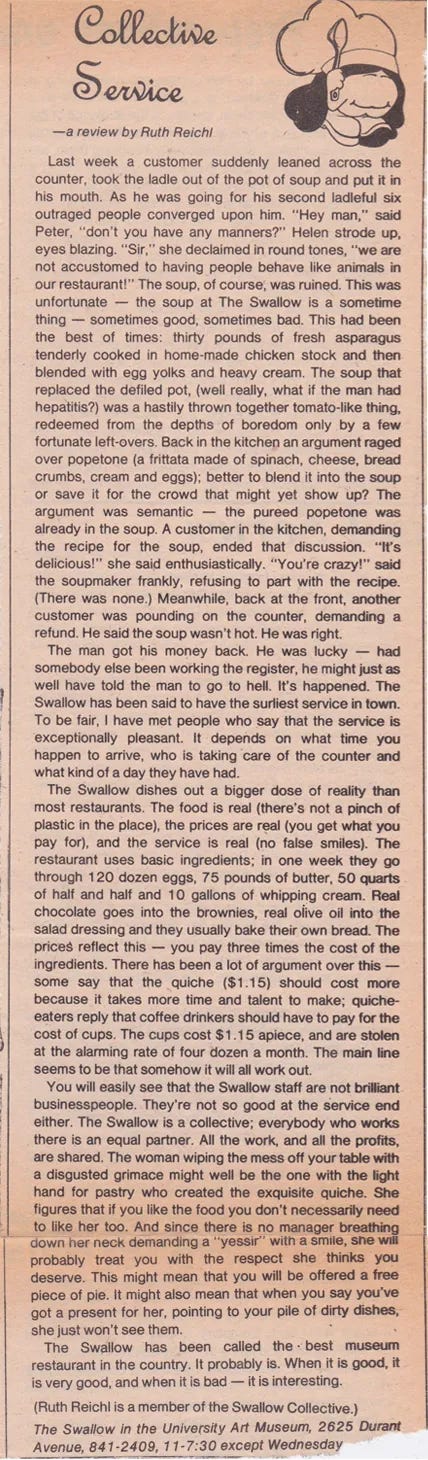
Since we’re talking about tipping, here’s another one from the archives, a view from the other side of the counter. I wrote this around 1975, when I was a member of The Swallow, a collectively-owned restaurant in Berkeley. It was published in The East Bay Review of the Arts. (I wrote reviews for free, hoping to get some clips so that one day I might actually get a paid writing job.)
To be honest, I’m kind of stunned they printed this piece. It is a very real slice of life in that restaurant.

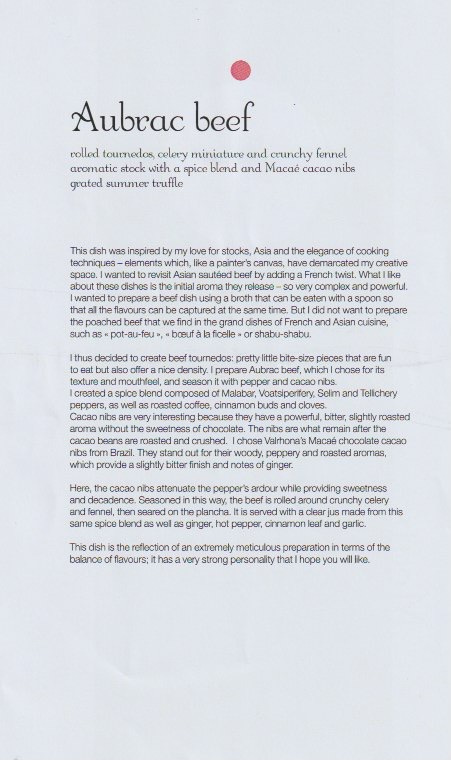
Have you read the latest news from France? This week it was announced that when French astronaut Sophie Adenot arrives at the International Space Station she will be dining on food made by Anne-Sophie Pic, the 3-star French chef. Lobster bisque and foie gras are on the menu.
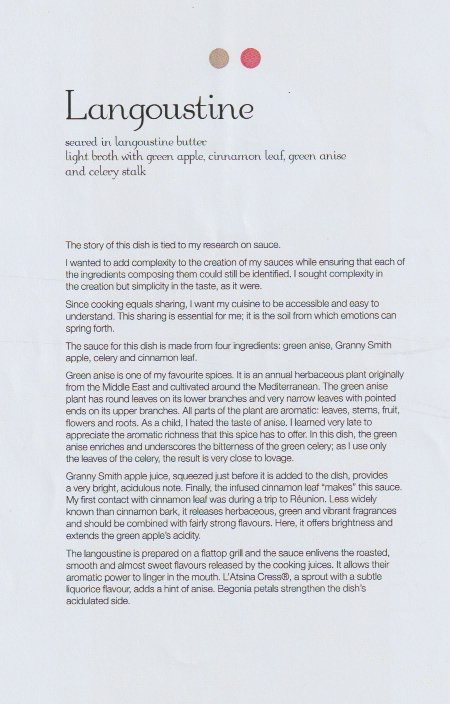
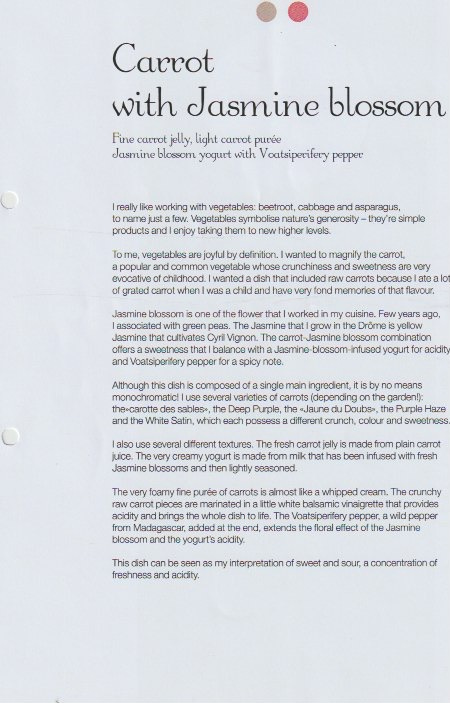
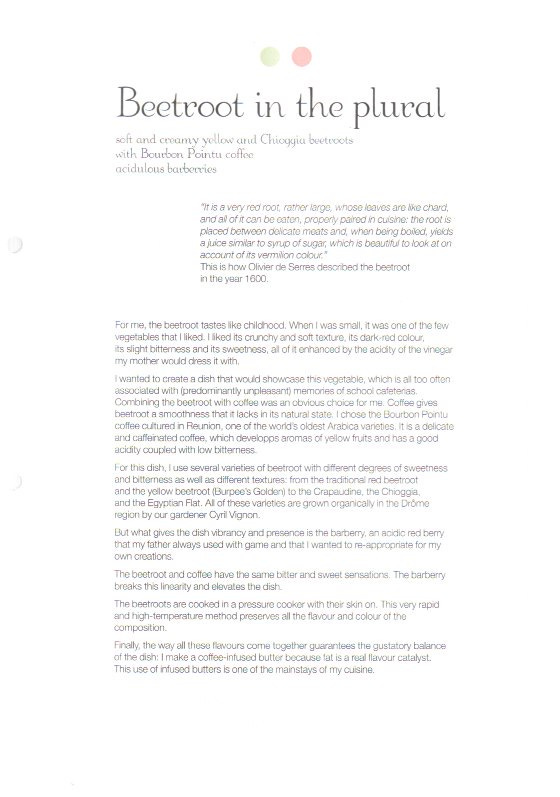
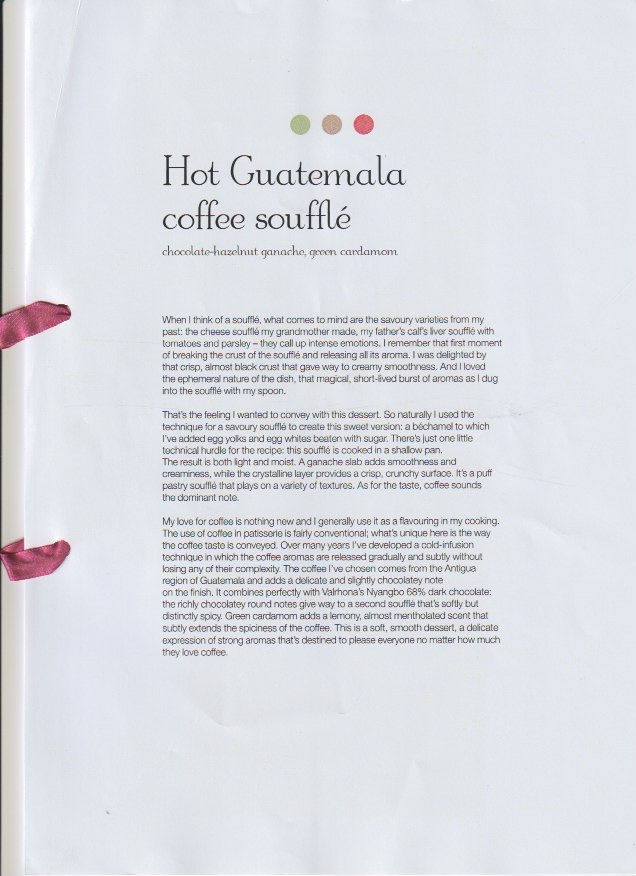
The article made me go looking for the menu from the last meal I had at Pic (in 2014). It is, as you will see, an astonishing artifact with a long description of each dish. I’ve posted a few dishes down below, but if you’d like to see more, let me know and I’ll post the rest next week.
.

Almost 40 years ago Colman Andrews took a group of chefs to Spain, and I was lucky enough to tag along with Alice Waters, Jonathan Waxman, Lydia Shire, Mark Miller and Bradley Ogden. I wrote about that trip in Comfort Me with Apples, but let me just say it was about the most fun I’ve ever had.
Colman is still taking people to Spain; in October he’s treating a very lucky group to The Ultimate Rice and Seafood Tour. A few spaces are still available; if I didn’t have a prior commitment I’d snatch one of them up.


For me ABC Carpet is a kind of dreamscape, a shop I occasionally wander through dreaming about how nice it would be to have all those beautiful plates, linens and glasses on my table. But everything is so expensive!
So when I got a notice a few days ago that the store is celebrating the Fourth with a site-wide sale, I wasn’t expecting much. Still, when I saw that these beautiful handmade crystal glasses were reduced from $24 to $10 each, I couldn’t resist. At this price it won’t be too terrible when they break (as glasses inevitably do)

Why do we have all this strife over tipping when Europeans and Japan, among others, figured it out decades ago? Pay people a fair wage and stop asking me to make up the difference between the bill and what's right.
I try to avoid restaurants that tack on anything more than say, 4%. There was a bill in California that would have forced them to add any service charge into the cost of an item, but restaurants got an exemption at the last minute. It's so confusing. Please just pay staff fair wages and have all costs reflected in the price of the meal!!