
Stormy Weather
A couple of recipes to see you through this season. The most beautiful chocolate you've ever seen. A wonderful vintage menu. And the most comforting dish I know.


These days when we’re not talking about politics we’re discussing the weather. It’s stormy no matter where you look. I’m a city person, but as I watch ice floating down the Hudson River I can’t help thinking about my first serious encounter with the ferocity of nature. I had just moved to the country, to a glass house on top of a mountain, and I was about to discover how quickly a snowstorm can change your life.

Up here on the mountain we feel utterly alone. It's a silent white world, flakes swirling down from the sky, piling up, obliterating every edge. Snow hugs the house in a soft embrace. The cars have vanished into huge humps. The driveway is impassable; the rest of the world fallen away.
It is easy to imagine coming down when it is all over to discover everything changed. Ten years might have passed in the storm. Or the clock moved backward while we were sleeping. Strange how quickly we become disoriented when robbed of the familiar.
Two days ago the power failed. No internet, no oven, very little light. Too distracted to work we roamed the house, feeling fragile, worrying about frozen pipes and running out of wood. Unable to concentrate I did what I always do in a crisis: I cooked.
Nothing is so soothing as the scent of a stew in a cold house in a cold climate. I made ragu. I made toasted cheese sandwiches and enormous salads, racing to use the vegetables before they wilted in depression. I took the bones from the freezer and transformed them into stock. But it was the boeuf bourguignon filling the house with the rich purple scent of wine and onions that finally worked some magic. It was like a promise that the snow really will end.
Some day.
Beef, Wine, Onion Stew
Take as many onions as you feel like chopping and throw them into a casserole with a bit of butter and a couple of strips of bacon, cut into little squares. Add a couple of carrots, cut into whatever size you consider edible. Cook them together until they are fragrant and just a bit golden. Add a few cloves of garlic, smashed, to the mix, and any herbs you happen to have on hand; thyme is nice, as is parsley, although personally I'd stay away from tarragon and rosemary. When they've all turned soft, add a squirt of tomato paste (it adds a touch of sweetness), stir for a minute or so and put the entire potful into a bowl to wait.
Melt a splash of oil and a pat of butter in the same pan. While it heats take a couple pounds of beef, cut up for stew, and pat it dry. Salt and pepper the cubes, then toss them in a bag with a bit of flour and shake until they look like they've been dusted with snow. Cook the beef in flights - it hates being crowded in the pan - until beautifully brown, and then set aside with the onions.
When all the beef has browned, deglaze the pan with a good glug of brandy. Return the beef and vegetables to the pot, cover them with most of a bottle of decent red wine and throw in a stalk of celery and a bay leaf if you've got them. Simmer gently, partly covered, for three or four hours. The aroma will fill your house and make you very happy.
Just before serving saute some mushrooms, quartered in a nice amount of butter for about ten minutes, adding salt and pepper at the end. Toss them into the stew and taste it. If it needs salt, pepper or more wine, add it.
I like this with simply boiled potatoes, but you could just serve it with a loaf of bread. In my house this will feed about four people, but on a really hungry day I could eat it all by myself.
A Few Notes on Making a Really Great Stew
Want to make an ordinary stew into something rich and silky, something that will perfume your house with promise—and fill your friends with joy? Here are a few easy tricks.
The first rule - and the most important - is not to buy something labeled “stewing meat.” That’s likely to be leftover bits from all over the animal, which will each cook differently. Buy a fatty piece of meat - beef chuck, pork butt, lamb shoulder - and cut it up yourself. And while you’re at it, cut the meat into larger chunks than you think you’ll need; the larger the piece, the slower the cooking. Do not be afraid of fat; remove it at the end, not the beginning, so you get the benefit of its flavor.
Second, take the trouble to brown the meat; I’ve seen many a stew not live up to its potential because the meat was halfheartedly browned. It’s a little extra work, but not that much, and it will reward you with richness. To do this, pat the meat very dry with paper towels, season it just before searing, get your pan very hot, and do not crowd the pan (which will steam the meat instead of browning it). Turn the meat to brown all sides, and if you need to brown the meat in batches, take the extra half-minute to deglaze the pan in between batches. This will let you keep all the rich flavor of the stuck brown bits and, just as importantly, not burn them when you’re searing the next batch.
Third, and this is very important, cook the meat very slowly once the liquid goes into the pot. If you cook it beyond a lazy simmer, the meat might get tender, but it will also be dry. A slow burble is most easily achieved not on top of the stove, but rather in a slow oven (300 degrees or so).
Fourth, be generous with flavorings - onions, garlic, herbs. Each will add complexity. And there’s no substitute for alcohol (beer or wine), which will unleash a whirlwind of hidden flavors.
Finally, think ahead. A stew needs time to rest. Let it sit in the refrigerator (or outside in the snow) for a day or two, gathering its thoughts, before removing the fat, gently reheating, and serving your stew to a few very lucky people.

The snow ended…..but it was still winter.
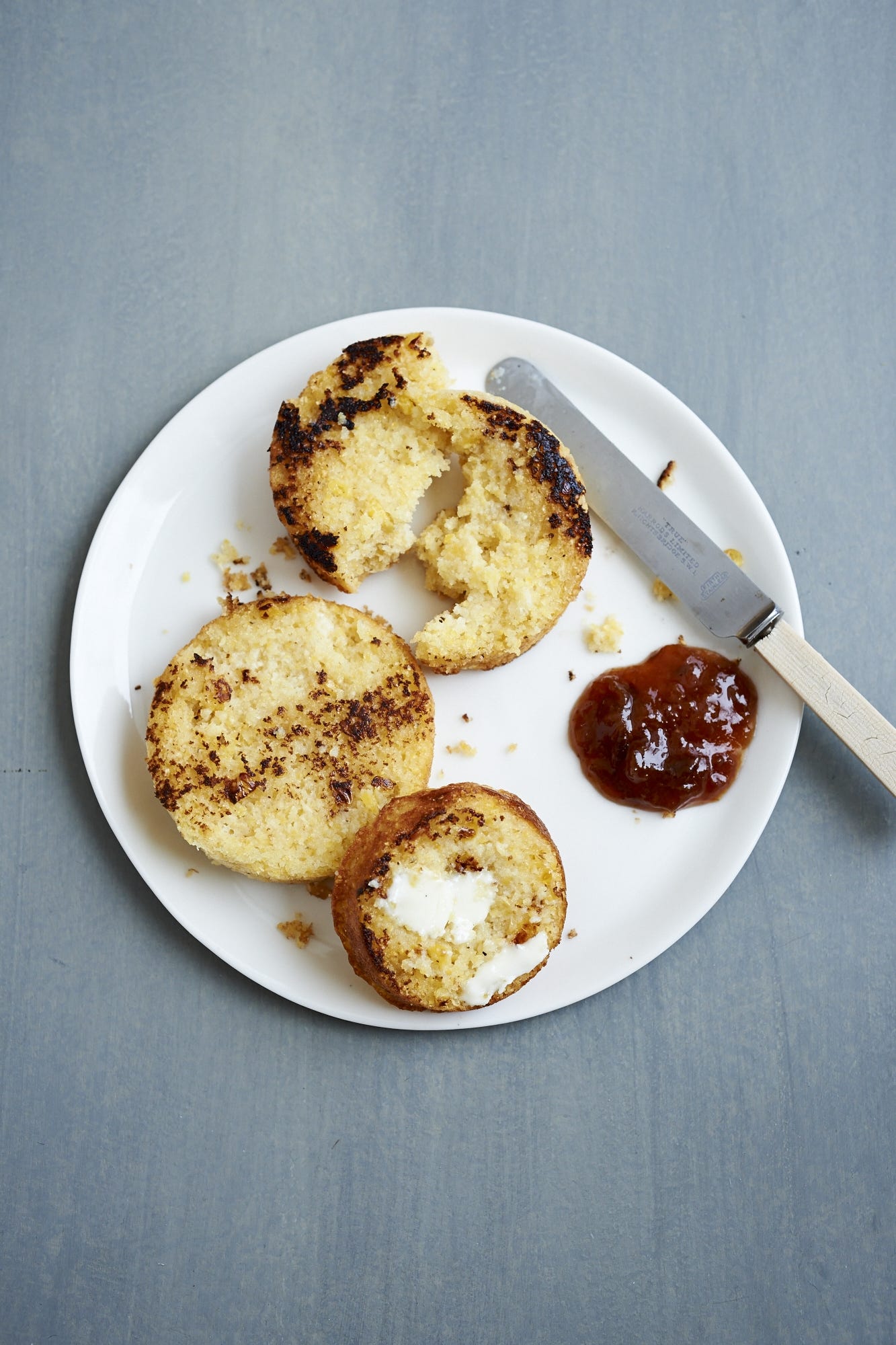
The sun is shining. The cats are purring. Icicles hang outside the window. Mountains of snow are piled against the door.
Michael and I are both going slightly stir crazy and today we’re going to try and make it down the mountain.
But first, a little breakfast. I’ve made these because they’re such a classic city dish, what I always ordered at the diner on the corner of Tenth Street and University Place when my father took me out for breakfast.
New York diners are, sadly, disappearing, a victim of gentrification. But these corn muffins remain, a little taste of the past.
New York Corn Muffins
1 cup cornmeal (preferably stone ground)
1 cup flour
6 tablespoons white sugar
2-1/2 teaspoons baking powder
1/2 teaspoon salt
1/4 teaspoon baking soda
6 tablespoons butter
1 cup buttermilk
1 egg plus 1 egg yolk
1 cup corn kernels
Preheat the oven to 400 degrees.
Mix the flour with the cornmeal in a medium bowl. Whisk in the sugar, baking powder, salt and baking soda.
Melt the butter, allow it to cool, then stir in the buttermilk along with the egg and egg yolk. Stir into the dry mixture. Toss in the corn kernels. (You can use frozen corn, and there’s no need to defrost them.) The dough will be lumpy; don’t worry about that.
Divide the batter into 12 and spoon into well-greased muffin tins. Bake for about 20 minutes. Cool for 5 minutes before turning the muffins out.
I like these best served the way they were in old New York coffee shops: split horizontally, brushed with butter and toasted on a griddle or in a pan.

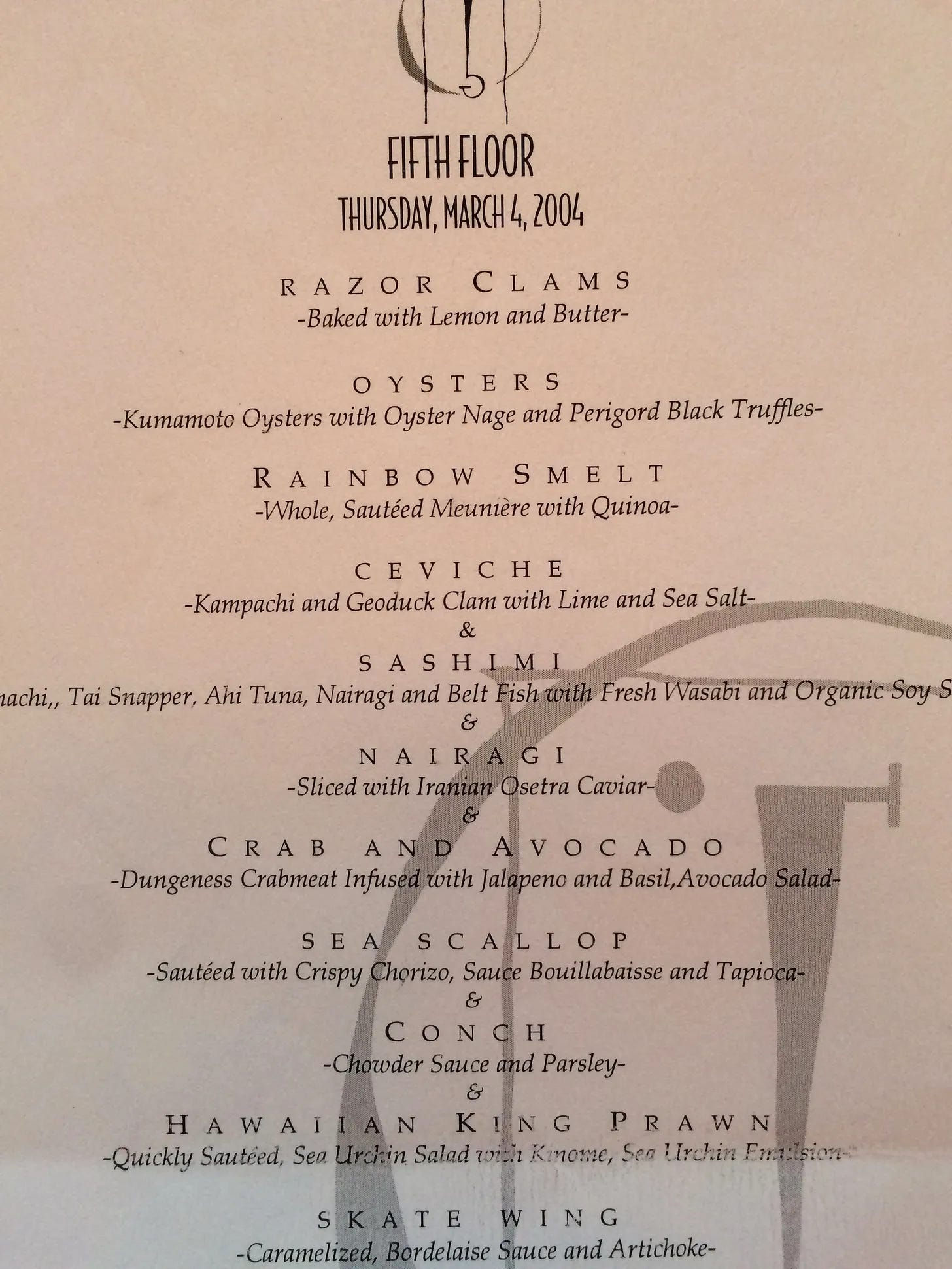
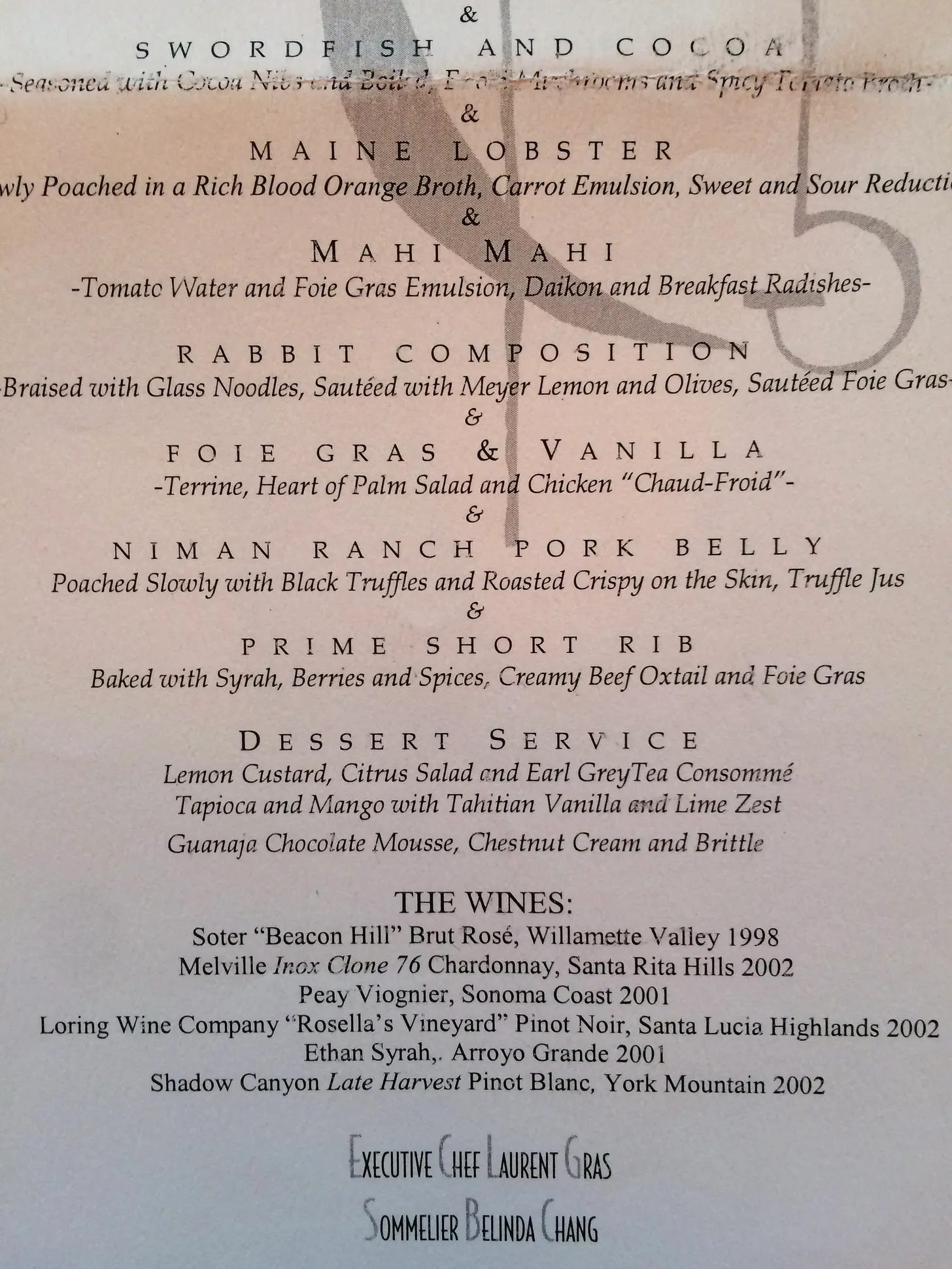
The first time I ate Laurent Gras’ food, I was hooked. It was at Peacock Alley in the Waldorf Astoria- a ridiculous restaurant which, in those days (the mid-nineties), still had a harp player plucking away at the strings. But despite the old fashioned setting, I can still remember the precision of the cooking and how fascinated I was by the flavors. I was dazzled.
Not surprising. Gras was young, but he’d already been Chef de Cuisine at Alain Ducasse’s flagship 3-star restaurant. He soon left Peacock Alley for Fifth Floor in San Francisco, and then went on to L2O in Chicago, gathering stars as he went. And then, to everyone’s surprise and disappointment, he left the kitchen and devoted himself to.... riding his bicycle.
This menu, from Fifth Floor, is an example of how ambitious his cooking can be. But I remember not only the meal, but also the wonderful wine pairings by sommelier Belinda Chang.

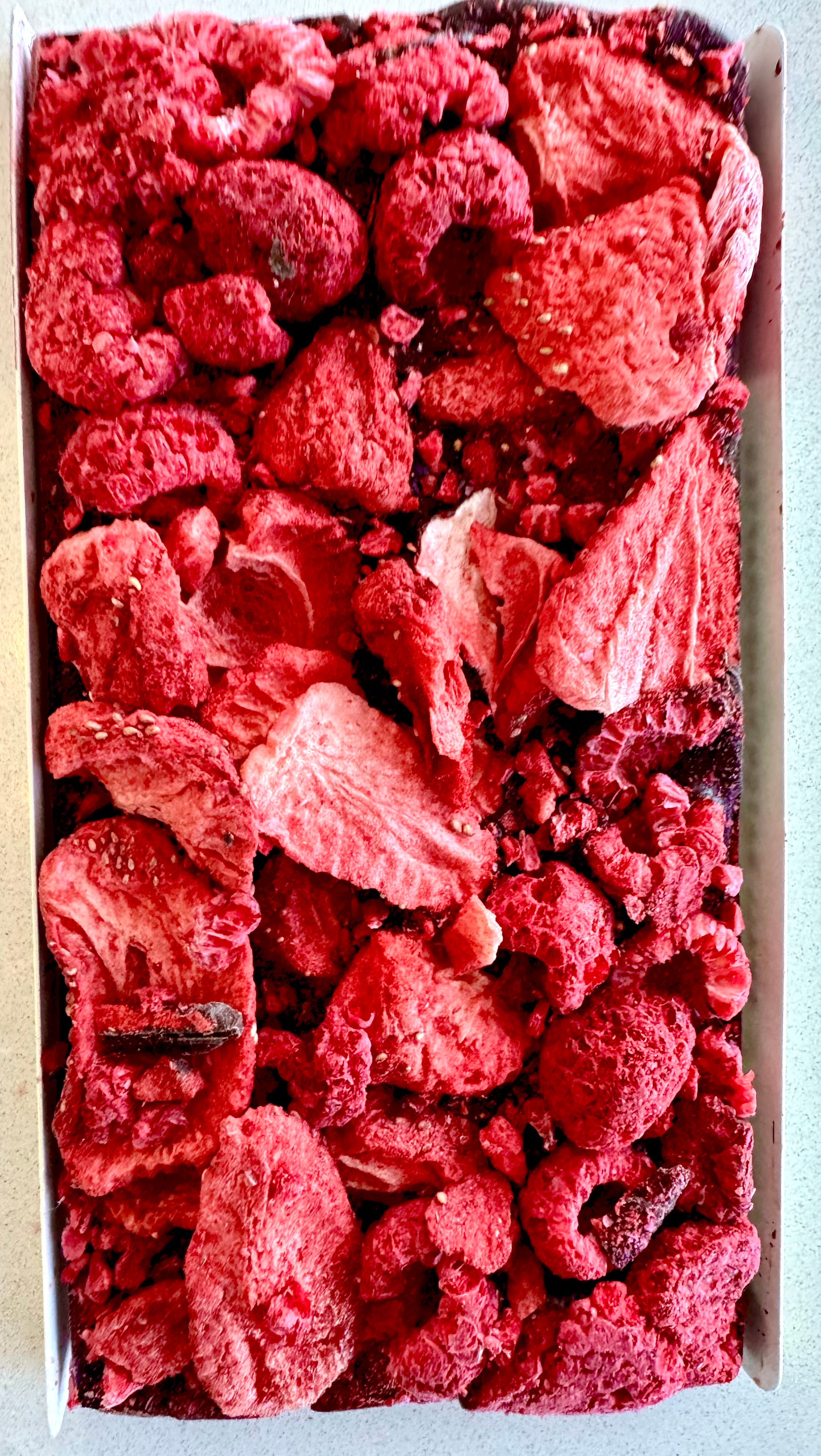
Have you ever seen a more beautiful chocolate bar than this Wildwood Berry Berry? I couldn’t resist it.
When you can bring yourself to take a bite you will find that it is very delicious with an intriguing sweet/tart edge.

I was so sad when Beverly Soon Tofu, one of my favorite Los Angeles restaurants, closed during Covid. But this week chef Daniel Patterson introduced me to the happiest replacement when he suggested we meet at Surawon Tofu House.
There is no better winter dish than a bubbling pot of sundubu-jjigae a spicy Korean stew that is hot in every possible way. The stew contains extra-soft tofu mixed with your choice of seafood or meats and a lot of vegetables, and it is usually served with an egg that you crack into the stone pot when it arrives, bubbling hot, at your table. The result is the most comforting pot of food you will ever eat. The bonus, at Surawon, is that those innocuous looking banchan are extremely seductive.

new york corn muffins sound delectable!!
Brilliant piece on slow-cooked comfort during bad weather. The detail about browning meat in batches instead of crowding the pan is one of those technique things that actually makesa huge diference in how deep the final flavor gets. I've always done stews on the stovetop but gonna try the oven method next time for that consistent low temp.